Should perpetrators of life-altering crimes always be punished?
June 4, 2026

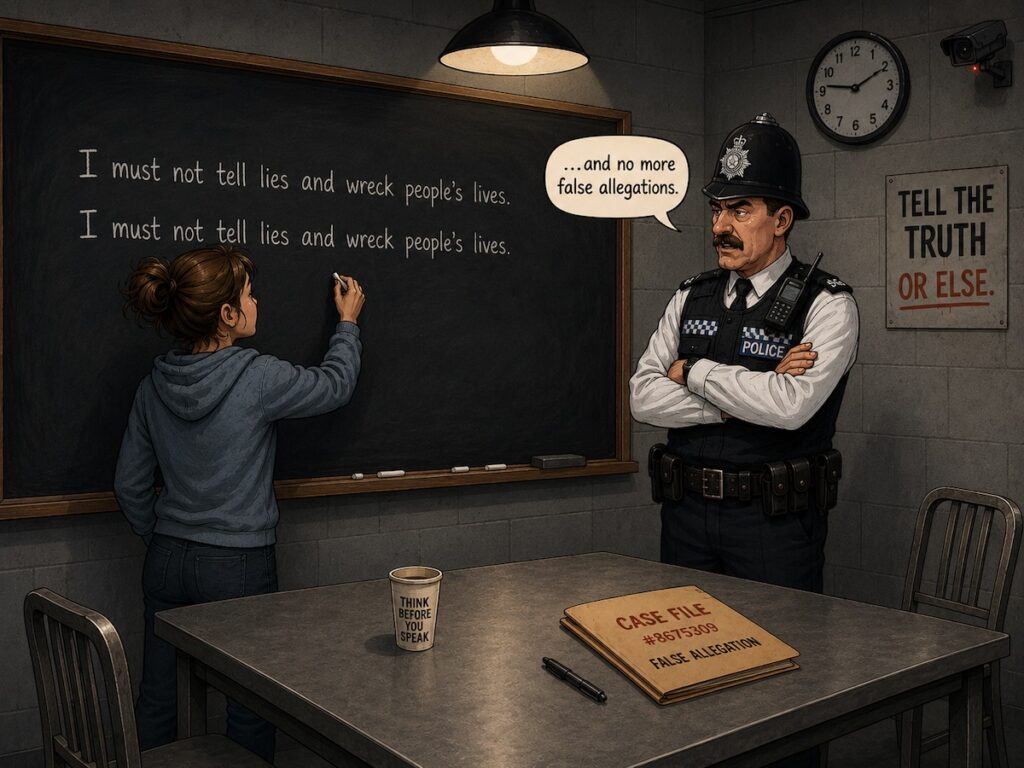
People on social media are always complaining that this country is soft on crime.
In the news recently, there has been a lot of discussion, and quite a lot of anger about the fact that the teenage perpetrators of rape against a couple of Hampshire girls were NOT given custodial sentences by the judge.
The following paragraphs in italics are taken from BBC News: (See original article)
Two of the boys are now aged 15 and the third 14.
One of the 15-year-olds was given a three-year Youth Rehabilitation Order (YRO) with 180 days of intensive supervision and surveillance for the rape of each of the two girls and two indecent images charges.The other 15-year-old was given the same sentence for three charges of rape against each of the victims and four counts of taking indecent images.
The 14-year-old was given an 18-month YRO for charges of rape in the January 2025 attack by encouraging one of the other defendants.
All three boys were also made subject to a three-month curfew and given a restraining order for 10 years not to contact their victims.
The boys would not have been sent to prison if they had been given custodial sentences. People who are aged under 18 serve custodial sentences in secure centres for children.
I’m not commenting directly on whether the sentencing decision in this case was right or wrong, What I want to highlight is the comparison between how the victims in this case felt and how victims of false allegations feel when the perpetrators of those crimes are protected, not just from custodial sentences, but from any prosecution at all.
And how the public anger at the former is not replicated for the latter.
The way I’ll do this is just to present a series of quotes taken from an interview with Laura Kuenssberg (LK) and ask you to imagine that they refer to false allegations, false accusers, and falsely accused, as the parallels are striking.
Victim’s father:
It seems to me like the victims of the ones that are suffering and the perpetrators are the ones that have seemingly got away scot free….
It’s a despicable crime whether it’s a child, adult, anyone, and I just think the judge’s message was “it’s okay. You can do it. I’ll just give you a slap on the wrist.”
Victim’s mother:
My world stopped. Everything stopped moving. It’s very strange when you have a trauma within the family. Everyone else’s life keeps moving on except yours. Yours stops.
The victim on how she was treated by other people
They’d always tell me they’d just tell me how much of a bad person I was because I was so disgusting … but no one ever knew the full story.
LK: So what do you want to happen?
Mother:
This needs to be reviewed. This needs to be re-looked at. This needs to be given justice. This needs to be given a custodial sentence. It has to be.
Victim:
All I can think about is if you can do the crime you can do the time, and I know it’s a well-known saying, but it should be more thought out. It should be something that actually happens, because yeah you’ll have your petty crimes you’ll have whatever … but this is different. You’re impacting someone else’s life.
It’s weird – it really is weird because I remember when I was younger, I was the happiest little kid he’d ever meet, and now all I can think about is being sad, being angry, stressed, tired, school, needing a job, trying to pull my life together while I feel like it’s falling apart.
LK: How much of a role do you think social media plays?
Victim:
It plays a big role, it really does … Once it’s posted on the internet there’s no going back – it’s there forever.
LK: The Prime Minister was the chief prosecutor in the country, so what would your message be to him today?
Father:
My honest message would be sort it out. Sort it out so that boys, girls, women, men are getting justice for crimes against them.Mother:
Please help if it was your daughter, your niece, your son, your nephew, your family member would you be happy? Because we’re not happy and I don’t think any other member of the public will be happy too, so you’re in a position of power to help so please help.
LK: What would you want other people listening to you today?
Victim:
I want other people listening to me to have a think. If it’s happened to them, please please reach out. Don’t fall apart because someone else has done something bad to you. Show them that you’re stronger. Show them that other people care. Show them you care about what they’ve done and that you can be better than what they are.
It wasn’t only the victims themselves who were ‘calling for justice’.
Giselle Pelicot, the victim in, arguably, the biggest rape trial in French history and who voluntarily waived her anonymity, speaking to the BBC, said: she was “deeply shocked that these individuals were in fact able to gain their freedom again when in fact the victims are suffering so hard they will never be able to heal”.
Cabinet Minister, Darren Jones, while trying to avoid pre-empting the Attorney General’s decision, could not help expressing the personal opinion that:
the girls [victims] and their families deserve justice – both for themselves and for others that are in that position, and that the boys [offenders] need to know that they can’t behave in that way and get away with it.
All of the above quotes could equally have been spoken by, or about victims of false allegations, and their families. False allegations have every bit as much power to wreck the lives of their victims – in some cases, even more. The criminal justice system in this country and around the world absolutely need to recognise that fact and actually prosecute the offenders instead of finding excuses not to do so.
The Prime Minister called the case “appalling” and said that the Attorney General, Lord Richard Hermer, had power to refer a case to the Court of Appeal and that power had been “now exercised”, which was “clearly the right outcome”.
Considering that many largely blame Sir Keir Starmer for the plight of the falsely accused for introducing the ‘believe the victim’ policy, it would be useful if he could show as much sympathy for those suffering the trauma of being falsely accused of rape, as he does for rape victims.
Unfortunately, victims of false accusations are not taken seriously by the police whose policy it is NOT to prosecute known false accusers “for fear that it might deter genuine rape victims form coming forward”.
This is a bit like a hospital telling a pancreatic cancer patient to go home because they might need the bed for a lung cancer patient.
Only when there is a real understanding of the trauma and life-wrecking effects of false accusations are really understood, might there be any progress in achieving justice for them

In recent years, several countries, succumbing to pressures from the MeToo movement and its followers, and wanting to show that they are doing something about it, have demonstrated a growing urgency to bring more prosecutions and convictions for alleged rapes and other sexual offences. With this has come an increased number of reported offences and a greater eagerness for police and prosecutors to bring charges.
What has not been recognised so widely is the increase in false allegations of sexual misconduct, still less their devastating effects on those accused.
Quite the reverse, such has been the stampede to bring justice for sex-offence ‘victims’, that police and prosecutors have often ridden roughshod over the rights of the accused and generally turned a blind eye to false accusations. They have even admitted to being reluctant to prosecute false accusers on the flawed premise that it might prevent other victims of sex offences from coming forward. Sadly, this shows an appalling failure to comprehend just how devastating false accusations are to those falsely accused.
In England and Wales, the Police and CPS only tend to prosecute false accusers only when there are multiple false allegations and when there is clear proof of their falsehood – in sharp contrast to the eager prosecution of alleged sex-offenders based only upon the word of the complainant.
Even then, the charge is usually ‘Attempting to pervert the course of Justice’, as if the person accused is of no consequence and the only victim is the Criminal Justice System itself.
In reaction to the hidden epidemic of false accusations, Falsely Accused Day, [https://falselyaccusedday.org/] taking place on the 9th September each year, was established to bring attention to the issue. This has now become an international event with campaigners from 19 other countries also holding peaceful protests on that day in 2024.
The burning question is: “When will those in power in any of these countries take notice of the devastation that false accusations can bring?”
The answer might seem unlikely to some, but in November, 2024, Argentina’s Justice Minister, Mariano Cúneo Libarona, sought to introduce harsher penalties for false accusers following a proposed new bill by Senator Carolina Losada.

The proposed bill would raise penalties to up to six years of imprisonment (from the current maximum of one year) for knowingly filing a false allegation in cases involving gender violence, abuse, or crimes against children. The bill also includes stiffer sentences for perjury, particularly in cases reliant largely on testimony, and calls for stricter scrutiny of legal professionals involved in such cases.
Ironically, where authorities in this country have resisted such measures partly because they think it would damage confidence in the system, Cúneo Libarona stated in a Senate Hearing:
“False accusations don’t just harm the accused, they erode the credibility of the entire system and public trust in institutions. We cannot allow lies to weaponize our justice system and destroy lives.”
In the same Senate Hearing,Andrea Guacci, a representative of the Women’s Front against False Accusations, said:
“False accusations do not discriminate gender…in all cases they fulfil one objective: to attack their human rights, their honor and good name.” She also said that “depression, anguish, psychological damage is serious” and that “this will protect the true victims of violence.”
A lawyer specializing in gender issues, María Fátima Silva, said that:
“The flip side of gender ideology is false accusations,…the damage is also to the affections because it destroys entire families and false accusations occur in two areas: criminal and civil.There would be no false accusations if justice and prosecutors investigated each accusation thoroughly and as appropriate, because they should detect that the accusation is false,”

Another organisation in Argentina dedicated to reducing false allegations is the False Accusations Observatory, a non-governmental organisation that works on the identification, documentation, and analysis of reports of false accusations. They produced a significant report in 2023 highlighting important statistical data. Their message is also clear, calling for urgent action…
“in the face of the growing wave of false accusations that harm innocent individuals and their families in Argentina…The consequences for those falsely accused are devastating. The most common include restraining orders, health deterioration, loss of contact with children, unjust social condemnation, chronic depression, and threats of more accusations.”
The organisation also recorded 11 known suicides as a result of false allegations at the time of the report.
I suppose it is a little reassuring that, in one country at least, government ministers and others with the power to invoke positive change in their criminal justice system, recognise both the growing problem of false accusations and also the sheer devastation to the lives of those affected by them.
But is it too much to hope for that their equivalents in our own country might start to take the veils from their eyes and recognise that, in England and Wales, we have the same problems, with the same devastating effects on victims, which are in need of equally urgent action?
All we can do is keep banging the drum, shouting the message, and hope that they will.

A quick search online for “latest scams” will confirm what the ladies on RipOff Britain have been showing us for some time:
Let us look at some examples from a long list
What characterises and links many of these scams is that they often target vulnerable people, often elderly, and con them into believing the scammer is someone they’re not.
Some of the varied methods they use to extract money are to:
Scammers rely on the fact they what they say COULD be genuine. Someone genuinely raising funds for a worthwhile charity may knock at your door. In that case, the victims are not just you but also the real charity.
Such people are happy exploiting the fears and weaknesses of vulnerable people to scam them out of money they may not be able to afford. They have no morals, no sense of right or wrong, no empathy for their victims. They are cold-blooded predators who think only of what they can get out of a situation.
If such a person thought that there was an almost surefire way of obtaining lots of money with very little risk, what do you think they would do?
Sadly, there are many people who have been the victims of rape, sexual assault, and sexual abuse as a child. And anyone with a conscience can only have sympathy with genuine victims of such crimes.

Unfortunately, however, it serves as extremely attractive bait to this type of unscrupulous people that victims (and those who claim to be victims) are able to claim what can be very substantial financial compensation from the Criminal Injuries Compensation Authority (CICA) and /or via a civil case against the alleged perpetrator.
The CICA will generally pay compensation to anyone who claims to have been a victim of sexual assault/abuse and have reported it to the police. It is not necessary for the accused to be convicted for this to happen.
The complainant/scammer will get lifetime anonymity and the support of the police who have been told to “believe the victim” (complainant).
If, by some good fortune (for the false accuser), their victim is found guilty, the scammer has a great chance of getting an even bigger payoff by going to a no-win, no-fee law firm and starting a civil case against his victim.
However, even if the case is dropped and, even if the police suspect that the allegations were fabricated, the chances of the false accuser being prosecuted are very small, unless the police find hard proof that they lied.
As we have seen, scammers are prepared to research, act a role, and go to a great deal of trouble, often for much smaller amounts of money. Why would such people NOT be attracted by making false allegations if the possibility was there?
Whether it concerns rape, other forms of indecent assault or historical abuse, many people will blindly declare that the numbers of genuine victims far outweigh the number of false allegations. Some may even put a figure on it – such as “only 1% or 2% are false.”
There is no justification for these claims and they are wrong.

When so-called ‘evidence’ is quoted, they often cherry-pick the figures to suit their argument.
For example, they will point to the low number of successful prosecutions of false accusers – and yet the same people complain of the low rate of successful prosecutions of sexual assault as a failing of the justice system.
Add to this, the reluctance to prosecute former complainants, no matter how dubious their claims and it is easy to see why successful prosecutions are so low.
What little research has been done points to much higher figures of false allegations.
Even from a purely avaricious standpoint (without considering other motives), it would be remarkable if there were not a large number of them.
And yet, it should not even be about numbers. Even if the statistics were as low as those claimed, it should make no difference to the fundamental principle of justice that the protection of the innocent is more important than the prosecution of the guilty. It is exactly why the burden of proof should always be on the prosecution.
This principle should be engraved into the minds of all those working in the justice system. And that applies equally to the Court of Appeal.
Society, the criminal justice system and genuine victims of sex crimes have to accept that making false allegations of sexual assault or abuse is a genuine problem. There are many possible motives for doing so but financial motivation is a big one.
Making false allegations of sexual assault or abuse, whether recent or long ago, against innocent people is considered fair game to unscrupulous people who will go to great lengths to lie and deceive their way to money, while riding on the back of the suffering of genuine victims.
It is not rare; it is common. Considering what is at stake, it would be extraordinary if it were not.
That is also why it is actually in the interests of genuine victims that the police investigate their claims fully and even-handedly.
If it was much harder and less profitable to make false allegations and get away with it, there would be fewer of them and make it easier for genuine victims to get the justice they deserve.
In recent times, discussions about justice regarding allegations of sexual abuse, sexual assault or rape have drawn unfortunate battle lines, with those representing the interests of “victims seeking justice” versus those representing “victims of false allegations”.
Reacting against police policy in the past in which victims (mainly women) justifiably felt that they were disbelieved and badly treated, campaigners who have fought for their rights seem mostly not only against any such progress that has been made being eroded, but insist that much more still needs to be done, such as with newer challenges such as the use of mobile phone data as evidence.
On the other side of the equation there are those who have been victims of false allegations and, though they may have sympathy with genuine victims, they feel that they are now in the position the complainants were before, with police prejudice stacked against them.
In other words, politicians and the criminal justice system, the police in particular, have succumbed to such pressure but, rather than aim for a more balanced approach, have merely switched sides, so that all the former bias is still present but now in favour of the complainant and against the defendant.
See post: Has the Sex Offence pendulum swung too far?
So the battle lines tend to be drawn as follows:
COMPLAINANTS (Genuine victims and False accusers) vs ACCUSED (Genuine offenders and Falsely accused)
This is sad for several reasons.
The true battle lines should be as follows:
VICTIMS (Genuine victims and Falsely accused) vs OFFENDERS (Genuine offenders and False accusers)
However, until the truth about false accusers and the damage they do is acknowledged, the current situation is unlikely to change. Sadly, while most falsely accused have sympathy for genuine victims, this is not generally reciprocated, and those who represent ‘victims’ rarely seem to show concern for those whose lives are ruined by false allegations. It is therefore difficult for victims of false allegations to fight for their rights without appearing to oppose the rights of genuine victims.

A case in point is the (so-called) Victims Commissioner, Dame Vera Baird, whose concept of the victims she is supposed to represent is so narrow that she seems not to care one jot for victims of false allegations, and chooses to focus solely on the interests of complainants, whether they are genuine or not.
Following the case of Liam Allan in which he narrowly escaped conviction for rape when a late disclosure of text messages on his accuser’s phone proved his innocence, there have been calls for data on accuser’s phones to be handed over as part of the investigation.
Vera Baird and others opposing this policy have termed this request ‘digital rape’. Quite how someone supposedly supporting victims of sexual assault and rape can equate being a victim of such a dreadful crime with a request to hand over one’s phone is something I find not only puzzling but a little shocking…
The claim is often made that false allegations are rare – as if that should make any difference! – but such claims are completely groundless.
While victim groups refer to reported rape as if they were all genuine and complain of the fact that only a small proportion result in a conviction, the same people point to the small numbers of convictions for false allegations as if they were the only ones. Nor do they take into account the fact that false accusers are rarely even prosecuted. It is a claim that is based entirely on double standards. It is impossible to know how many false allegations there are, but more serious research has tended to show that they are very far from rare.
There has been a movement towards ‘victim-centric’ justice but I believe this is wrong. While the suffering of victims is always a factor to be taken into account, the wider principles of justice, from the investigation stage through to sentencing after conviction, should remain paramount – especially the protection of the innocent.
Furthermore, the level of suffering of those who have been falsely accused of sexual crimes, especially concerning children, is grossly under-estimated by the justice system. This leads to the reluctance to prosecute false accusers for a vague, non-validated assumption that it would lead to fewer genuine rape victims coming forward. This puts the falsely accused on a much lower level of victimhood than rape victims, but the reality is that they are not.
Failing to prosecute known false accusers is no more justifiable than doing so with known rapists. There needs to be a specific crime of making false accusations and it needs to be enforced as strongly as any other serious crime with an appropriate sentence.
For a more detailed explanation of the importance of this, please read this post:

In the 1980s, a woman was raped. She was shocked, traumatised and took steps to try to ensure that she would not see the person ever again.
But she did not go to the police. Why not?
The main reason was that the police had a very bad reputation concerning the way that women who reported sexual assaults were treated by them. (Much worse than it is today).
The perception was not only that they were ‘disbelieved’ but that there would be little, if any, sympathy and she would not be taken seriously.
There was a perception that women who reported such crimes were made to feel that, if it happened at all, then they themselves were probably largely to blame. Furthermore, there was the impression that many men in the police thought that they should “just get over it”.
Naturally, and justifiably, women felt that this was an unacceptable attitude and an intolerable situation but we need to be more specific and ask “What exactly was wrong with the attitude of the police?”
I’ll give my answer to that question a little later but, for now, let’s move on.
Women’s groups’ campaigns against this treatment; a similar trend was happening in the United States and, gradually, the self-described ‘victims’ became a powerful minority group.
Our justice system listened and responded – and made a big mistake.
In 2014, the then Director of Public Prosecutions (DPP) in the UK, Keir Starmer, changed the policy of the Crown Prosecution Service (CPS) of which he was the head, encouraging the them (and by extension the police) to start with the assumption that the complainant is telling the truth. ‘Victims’ were encouraged to come forward with the assurance “you will be believed”. One effect of this change was that complainants were called ‘victims’ from the outset and, by extension, the accused person must therefore be the ‘perpetrator’.
Genuine victims of sexual offences may understandably think that this is a great step forward. However, it creates one huge problem:
The assumption that a complainant is telling the truth which automatically creates the assumption of guilt for the accused person flies in the face of, arguably, THE FIRST Principle of British Justice – the presumption of innocence.
[See my post: The first principle of a just legal system].
Sir Richard Henriques, in his report of the Met Police handling of Operation Midland concluded:
“I have a clear and concluded view. All ‘complainants’ are not ‘victims’. Some complaints are false and thus those ‘complainants’ are not ‘victims’. Throughout the judicial process the word ‘complainant’ is deployed up to the moment of conviction where after a ‘complainant’ is properly referred to as a ‘victim’.
Since the entire judicial process, up to that point, is engaged in determining whether or not a ‘complainant’ is indeed a ‘victim’, such an approach cannot be questioned. No Crown Court judge will permit a ‘complainant’ to be referred to as a ‘victim’ prior to conviction.
Since the investigative process is similarly engaged in ascertaining facts which will, if proven, establish guilt, the use of the word ‘victim’ at the commencement of an investigation is simply inaccurate and should cease.”
Sir Richard Henriques
Furthermore, it leads inexorably to a condition of Confirmation Bias.
Confirmation bias is the tendency to search for, interpret, favour, and recall information in a way that confirms one’s pre-existing beliefs or hypotheses. It is a type of cognitive bias and a systematic error of inductive reasoning.” – Wikipedia
In other words, the police and the CPS are likely to be led down a path of searching for and finding only evidence which confirms their belief.
So let me return to my earlier question.
Q. What exactly was wrong with the treatment of complainants in the days before the ‘believe the victim’ policy?
A. The police took sides before any investigation had taken place.
If women were correct in thinking that they were disbelieved, then what was wrong was the fact that, before any investigation, a pre-existing prejudice against the complainant led to the police already siding with the accused.
It was the prejudice that was wrong, not which side they picked.
For the police now to ‘believe the victim’ (or rather, the complainant) before any investigation, which automatically means ‘disbelieve the accused’, is to make exactly the same mistake but having switched sides.
That was wrong before and it’s still wrong now.
It is not for the police to decide in advance, before a full, impartial investigation, who is telling the truth and who is not. It is their job to investigate the facts fully on all sides and attempt, through those facts, to discover who is telling the truth.
What SHOULD have happened to correct the appalling situation which existed before was for the police to show respect for the people who made allegations; to treat them with the sensitivity that a genuine victim deserves (because they may well be one).
However, at that point, they must bear in mind that no crime has yet been proven and the suspect also deserves the respect due to someone who may be innocent; in which case, they are actually the victim. That, after all, is the basis of our justice system. A person is deemed innocent until proven guilty.
This applies whether the complainant or accused is female or male and whether the alleged offence is a contemporary one or a historical one.
Therefore, the police should have taken the allegations seriously and made a full, fair and even-handed investigation, exploring all avenues which may lead them to who is actually telling the truth.
If there is sufficient evidence to support the allegations, the case should be handed to the CPS who should also behave in a fair and even-handed way. They have a duty to prosecute only those cases where there is sufficient evidence to suggest a good chance of conviction and a continuing duty to monitor that situation.
(N.B. “a good chance of conviction” is not the same as “a good chance that the accused are guilty”, but more of that in another post),
If there is not sufficient evidence to prove guilt beyond reasonable doubt, the case should NOT proceed, no matter what the pressures are to do so.
The ‘victim-centric’ justice system that we have in 2022 shows that the pendulum has indeed swung much too far in favour of complainants, which is in conflict with the fundamental principle of the presumption of innocence at the very heart of our justice system.
All complainants should certainly be treated with sensitivity and their accounts taken seriously, but a full and fair investigation of the facts must nonetheless take place, with facts in favour of the accused given as much weight as those for the complainant.
Only if and when the facts point to the truthfulness of the allegations should a prosecution take place.
That is in accordance both with the fundamental principles of our justice system and with the stated principles of the Crown Prosecution Service.
If, on the other hand, the police find sufficient evidence to believe that the complainant has fabricated the allegations, they should be charged with attempting to pervert the course of justice. As the requirement for sufficient evidence would now be applicable, it should not deter genuine victims from reporting an assault.
The launch of FAIR – Falsely Accused Individuals for Reform – stimulated a debate with passionate views on both sides.
FAIR was created by Daniel Janner QC, son of the late Lord Janner who was falsely accused of sexual crimes, and has the aim of changing the law to prevent the publication of the identity of people accused of sex offences until charged.
FAIR’s campaign is to have the law changed so that those accused of sexual crimes were given anonymity until they are charged by the Police. At present, while complainants claiming to be victims of alleged sexual crimes are given lifelong anonymity, the accused are given no such protection.
The campaign launched a petition and was given added media attention by the support of, among others, Sir Cliff Richard, Paul Gambaccini and Harvey Proctor, well-known people whose lives were ruined by the public disclosure of allegations which were without credible foundation.
Those who are against the proposed changes include those who campaign for the rights of victims of Sexual Offences. Their arguments may be summarised as follows:
(Numbers relate to the numbered points above).
Unfortunately, this does not work in reverse. If no one else comes forward despite wide-ranging publicity, or if others come forward in support of the accused, it counts for nothing.
It also reverses the true priorities of the justice system. It is a fundamental principle of justice that protection of the innocent comes before prosecution of the guilty. (See this post for reasons why).It is Daniel Janner’s view that the campaign as it stands is difficult enough to persuade the public and the government to change and for this reason has stopped at “before charge” and this would have helped those mentioned above who are supporting the campaign.
However, there are, of course, many people who have been the victims of false allegations who were charged and for them, the campaign does not go far enough.
Campaigning figures such as (sadly, the now late) Simon Warr argued that, given that the damage suffered by those who are not charged increases dramatically after being charged, and that the protection of anonymity should apply until conviction.
They claim that the lives and careers of innocent people falsely accused and charged would still be ruined even if the policy for which FAIR are campaigning had been in place.
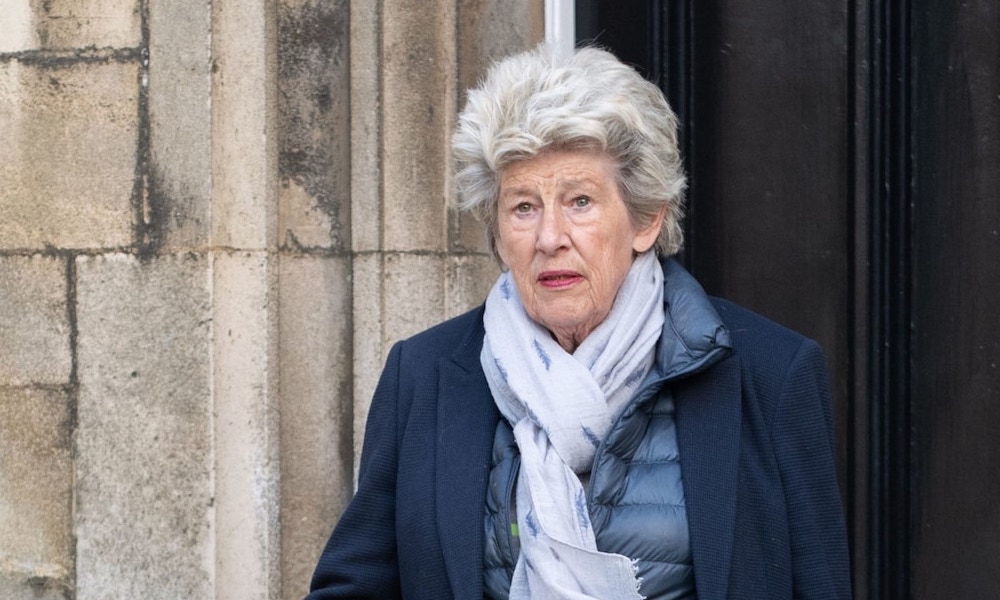
One of the relatively few women to have been accused, Lady Lavinia Nourse, the widow of the late Sir Martin Nourse, an eminent judge, was cleared in May of all 17 counts of Historic Sexual Abuse (HSA) for alleged events in the 1980s and takes it further still, believing that complainants should lose anonymity after a trial in which the accused has been acquitted.
In a Woman’s Hour interview with Emma Barnett, Lady Bourse said:
“I know who accused me but of course I can’t say who accused me.
And this makes conversations … very difficult because I can’t be honest and frank. That’s what makes it so appalling. And makes things like this so difficult because I can’t be truly honest about him…
“What’s been said, what’s been written will live with me forever. And yet the person who has made these accusations walks free, and can continue to say whatever he likes for the rest of his life.”
For cases which make the national press, it is also likely that members of the jury will already have read the allegations and been unduly influenced before having heard any evidence at trial. The salacious nature of such cases makes this far more likely than other crimes, such as armed robbery or murder. Even if the jury was not previously aware of any press coverage, any directions by the judge that members of the jury must not look at them is likely, in many cases, to have the opposite effect, knowing damn well that such an instruction is unenforceable and the breaking of such rules undiscoverable.
The problem with Lady Nourse’s view is that many would say that it can’t be assumed that every time there is no conviction, the complainant must be lying, even if many of them are and that it would prevent many genuine victims reporting it.
I do think that, in a fair system, there would be anonymity until conviction, but I can also see that the FAIR campaign will still be an uphill struggle; adding the extra level might make it impossible.
I also believe that, where there is good reason (evidence) to believe that allegations are false, rather than just unproven, accusers should be prosecuted and lose their anonymity. Genuine accusers should not fear this as there would not be any evidence to suggest they were lying.
To sign the petition visit this link:
FAIR’s website shows a video of Sir Cliff Richard talking about the campaign.