
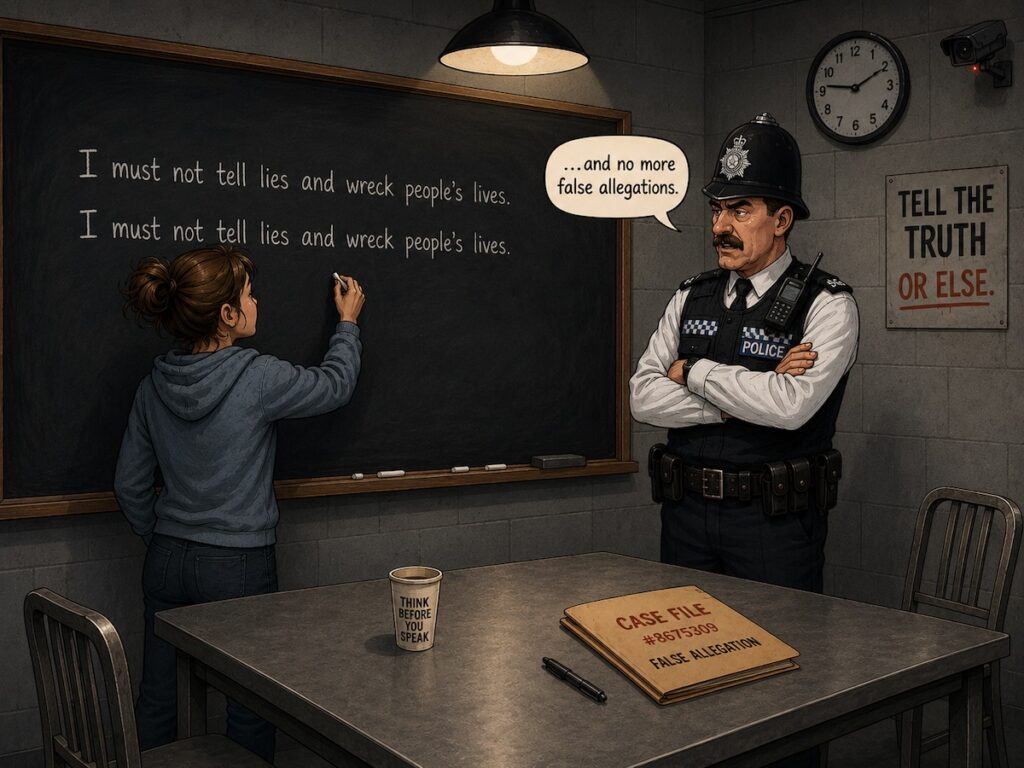
People on social media are always complaining that this country is soft on crime.
In the news recently, there has been a lot of discussion, and quite a lot of anger about the fact that the teenage perpetrators of rape against a couple of Hampshire girls were NOT given custodial sentences by the judge.
The following paragraphs in italics are taken from BBC News: (See original article)
Two of the boys are now aged 15 and the third 14.
One of the 15-year-olds was given a three-year Youth Rehabilitation Order (YRO) with 180 days of intensive supervision and surveillance for the rape of each of the two girls and two indecent images charges.The other 15-year-old was given the same sentence for three charges of rape against each of the victims and four counts of taking indecent images.
The 14-year-old was given an 18-month YRO for charges of rape in the January 2025 attack by encouraging one of the other defendants.
All three boys were also made subject to a three-month curfew and given a restraining order for 10 years not to contact their victims.
The boys would not have been sent to prison if they had been given custodial sentences. People who are aged under 18 serve custodial sentences in secure centres for children.
I’m not commenting directly on whether the sentencing decision in this case was right or wrong, What I want to highlight is the comparison between how the victims in this case felt and how victims of false allegations feel when the perpetrators of those crimes are protected, not just from custodial sentences, but from any prosecution at all.
And how the public anger at the former is not replicated for the latter.
The way I’ll do this is just to present a series of quotes taken from an interview with Laura Kuenssberg (LK) and ask you to imagine that they refer to false allegations, false accusers, and falsely accused, as the parallels are striking.
The Interview with Laura Kuenssberg
Victim’s father:
It seems to me like the victims of the ones that are suffering and the perpetrators are the ones that have seemingly got away scot free….
It’s a despicable crime whether it’s a child, adult, anyone, and I just think the judge’s message was “it’s okay. You can do it. I’ll just give you a slap on the wrist.”
Victim’s mother:
My world stopped. Everything stopped moving. It’s very strange when you have a trauma within the family. Everyone else’s life keeps moving on except yours. Yours stops.
The victim on how she was treated by other people
They’d always tell me they’d just tell me how much of a bad person I was because I was so disgusting … but no one ever knew the full story.
LK: So what do you want to happen?
Mother:
This needs to be reviewed. This needs to be re-looked at. This needs to be given justice. This needs to be given a custodial sentence. It has to be.
Victim:
All I can think about is if you can do the crime you can do the time, and I know it’s a well-known saying, but it should be more thought out. It should be something that actually happens, because yeah you’ll have your petty crimes you’ll have whatever … but this is different. You’re impacting someone else’s life.
It’s weird – it really is weird because I remember when I was younger, I was the happiest little kid he’d ever meet, and now all I can think about is being sad, being angry, stressed, tired, school, needing a job, trying to pull my life together while I feel like it’s falling apart.
LK: How much of a role do you think social media plays?
Victim:
It plays a big role, it really does … Once it’s posted on the internet there’s no going back – it’s there forever.
LK: The Prime Minister was the chief prosecutor in the country, so what would your message be to him today?
Father:
My honest message would be sort it out. Sort it out so that boys, girls, women, men are getting justice for crimes against them.Mother:
Please help if it was your daughter, your niece, your son, your nephew, your family member would you be happy? Because we’re not happy and I don’t think any other member of the public will be happy too, so you’re in a position of power to help so please help.
LK: What would you want other people listening to you today?
Victim:
I want other people listening to me to have a think. If it’s happened to them, please please reach out. Don’t fall apart because someone else has done something bad to you. Show them that you’re stronger. Show them that other people care. Show them you care about what they’ve done and that you can be better than what they are.
Other quotes
It wasn’t only the victims themselves who were ‘calling for justice’.
Giselle Pelicot, the victim in, arguably, the biggest rape trial in French history and who voluntarily waived her anonymity, speaking to the BBC, said: she was “deeply shocked that these individuals were in fact able to gain their freedom again when in fact the victims are suffering so hard they will never be able to heal”.
Cabinet Minister, Darren Jones, while trying to avoid pre-empting the Attorney General’s decision, could not help expressing the personal opinion that:
the girls [victims] and their families deserve justice – both for themselves and for others that are in that position, and that the boys [offenders] need to know that they can’t behave in that way and get away with it.
Conclusion
All of the above quotes could equally have been spoken by, or about victims of false allegations, and their families. False allegations have every bit as much power to wreck the lives of their victims – in some cases, even more. The criminal justice system in this country and around the world absolutely need to recognise that fact and actually prosecute the offenders instead of finding excuses not to do so.
The Prime Minister called the case “appalling” and said that the Attorney General, Lord Richard Hermer, had power to refer a case to the Court of Appeal and that power had been “now exercised”, which was “clearly the right outcome”.
Considering that many largely blame Sir Keir Starmer for the plight of the falsely accused for introducing the ‘believe the victim’ policy, it would be useful if he could show as much sympathy for those suffering the trauma of being falsely accused of rape, as he does for rape victims.
Unfortunately, victims of false accusations are not taken seriously by the police whose policy it is NOT to prosecute known false accusers “for fear that it might deter genuine rape victims form coming forward”.
This is a bit like a hospital telling a pancreatic cancer patient to go home because they might need the bed for a lung cancer patient.
Only when there is a real understanding of the trauma and life-wrecking effects of false accusations are really understood, might there be any progress in achieving justice for them